NAVIGATION
New to First Book?
Join us to connect with thousands of fellow educators and access exciting educational events and resources for you and your students.
We use cookies to keep our site secure, improve your experience, and understand how our content is used. You can accept all cookies or decline non-essential ones.
New to First Book?
Join us to connect with thousands of fellow educators and access exciting educational events and resources for you and your students.
Authored by First Book Staff on November 19, 2020
Posted in: Impact Stories
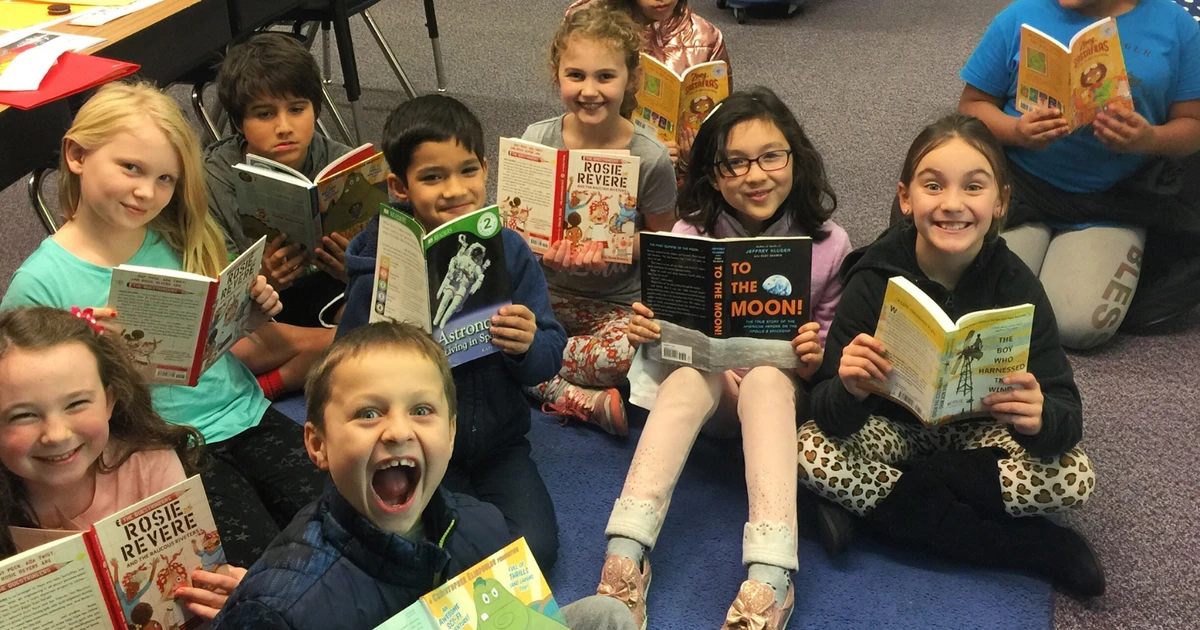
WASHINGTON, Nov. 19, 2020 --First Book, the nonprofit social enterprise focused on equal access to quality education, today announced that it has launched its second annual #GiveAMillion campaign designed to raise $1 million between now and December 31st to get 1 million new, high-quality books to the children that need them most this holiday season.
For the one in six children in the US living in poverty, the leading indicators of a child's education success – book ownership and a print-rich environment – are hard to come by. For example, a study found that in one low-income neighborhood, there wasonly one bookfor more than 800 children1, while in more prosperous neighborhoods, there are 13 books foreverychild2.
Moreover, a First Booksurveyhighlights that the educational crisis has been intensified by COVID-19. According to the study, there are two key factors contributing to this educational crisis: the mental/social-emotional health of kids and families and a widening digital divide making the need for resources even more critical. In fact, 81% of educators cited physical books as the #1 resource they would like to provide to their students during the crisis.
"As Charles W. Eliot once said, 'Books are the quietest and most constant of friends; they are the most accessible and wisest of counselors, and the most patient of teachers.' This is especially true today." said Kyle Zimmer, president, CEO and co-founder of First Book. "As schools open and close with the COVID positivity rates, lack of access to resources for those learning virtually has become critical. Sharing new books with kids in need and creating opportunities for them to have their very own books can have an immeasurable impact. Raising $1 million to #GiveaMillion books this holiday season provides great stories during a difficult period but also provides a confidence boost and the academic opportunities that are priceless."
Thanks to generous book donations and additional support from First Book's publishing partners, the #GiveaMillion campaign will have the limited opportunity to gift a brand-new book directly to a child in need for just $1: $100 will support a classroom, $500 will support a grade level, $1,000 will support a school, and $5,000 will support an entire community. Visit firstbook.org/giveamillion for more information and to donate.
Founded in Washington, D.C., in 1992 as a 501(c)3 nonprofit social enterprise, First Book is a leader in the educational equity field. Over its 29-year history, First Book has distributed more than 200 million books and educational resources, with a retail value of more than $2 billion. First Book believes education offers children in need the best path out of poverty. First Book breaks down barriers to quality education by providing its Network of more than 500,000 registered teachers, librarians, after school program leaders, and others serving children in need with millions of free and affordable new, high-quality books, educational resources, and basic needs items through the award-winning First Book Marketplace nonprofit eCommerce site. The First Book Network comprises the largest and fastest-growing community of formal and informal educators serving children in need.
First Book also expands the breadth and depth of the education field through a family of social enterprises, including First Book Research & Insights, its proprietary research initiative, and the First Book Accelerator, which brings best-in-class research-based strategies to the classroom via relevant, usable educator resources. First Book Impact Funds target support to areas of need, such as rural communities or increasing diversity in children's books.
For more information, visitfirstbook.orgor follow the latest news onFacebookandTwitter.
[1] Susan B. Neuman, Naomi Moland. "Book Deserts." Urban Education, 2016. DOI: 10.1177/0042085916654525
[2] Sikora, et al. DOIhttps://doi.org/10.1016/j.ssresearch.2018.10.003